SOCIAL CONTROL
Dr. Tanmoy Mukherji
Advocate
SOCIAL CONTROL
Tanmoy Mukherji
Advocate
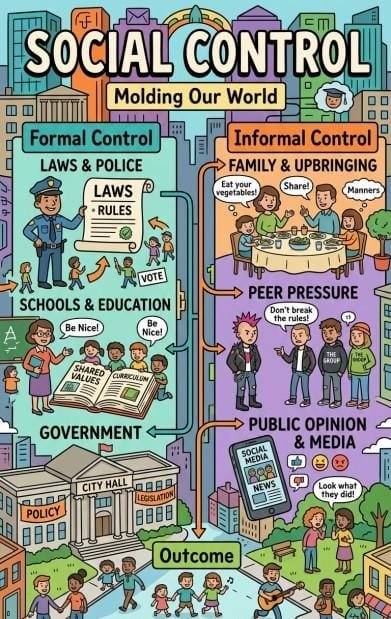
1. Meaning of Social Control
Social control refers to the mechanisms, processes, and institutions by which society regulates individual behaviour to maintain social order, conformity, and stability.
Definition:
E.A. Ross: “Social control is the system of devices whereby society brings its members into conformity with accepted standards of behaviour.”
Ogburn & Nimkoff: “Social control is the pattern of pressures which society exerts to maintain order and establish rules.”
2. Nature of Social Control

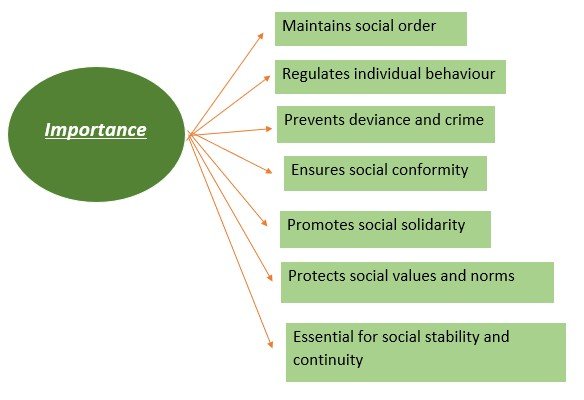
3. Need / Importance of Social Control-
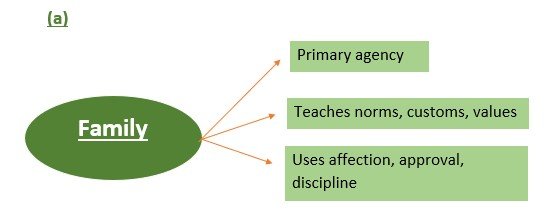
4. Agencies of Social Control
Agencies are institutions through which social control is exercised.


5. Types of Social Control
(a) Informal Social Control
→Unwritten rules
→Customs, traditions, folkways, mores
→Operates through family, religion, community
Examples: praise, ridicule, shame
(b) Formal Social Control
→Written rules and laws
→Enforced by state institutions
Examples: laws, courts, police, imprisonment
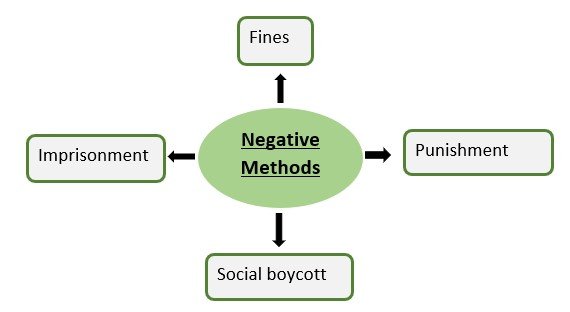
6. Methods of Social Control

7. Social Control and Socialisation-
→Socialisation is a means of social control
→Through socialisation, individuals internalise norms
→Ensures voluntary conformity
→Begins from childhood and continues throughout life
8. Social Control in Traditional and Modern Societies
→Traditional Society
→Modern Society
→Informal control dominant
→Formal control dominant
→Customs & religion
→Laws & legal system
→Community pressure
→Institutional regulation
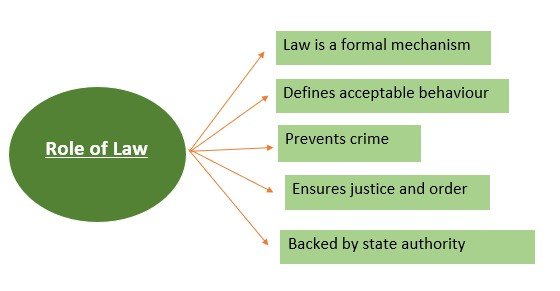
9. Role of Law in Social Control
Social control is essential for the smooth functioning of society. Without social control, society would face chaos, disorder, and disintegration. Both formal and informal mechanisms work together to maintain social harmony and stability.

we believe in a holistic approach to legal education building not just lawyers, but socially conscious leaders of tomorrow.
