Child Marriage-
Dr. Tanmoy Mukherji
Advocate
Child Marriage-
Tanmoy Mukherji
Advocate
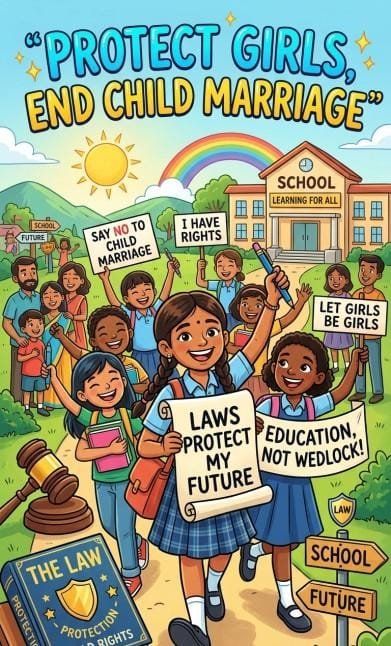
1. Meaning of Child Marriage (Sociological Perspective)
→Child marriage refers to a social institution where boys and/or girls are married before attaining physical, psychological, and social maturity.
→From a sociological viewpoint, it is not merely a legal issue but a product of social structure, culture, and tradition.
2. Child Marriage as a Social Institution
Regulated by customs, traditions, caste norms, and kinship rules.

3. Causes of Child Marriage (Sociological Factors)
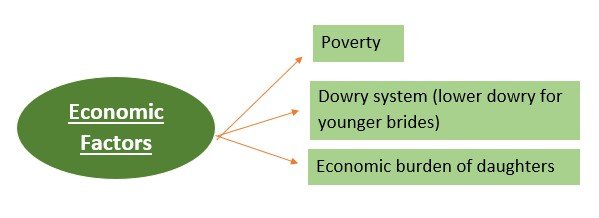
A. Economic Factors-
B. Cultural & Traditional Factors

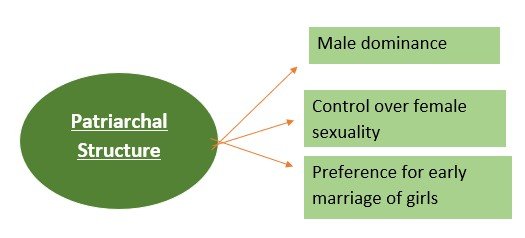
C. Patriarchal Structure
D. Social Structure

E. Lack of Education

4. Sociological Theories Explaining Child Marriage
A. Functionalist Perspective-

B. Conflict Theory
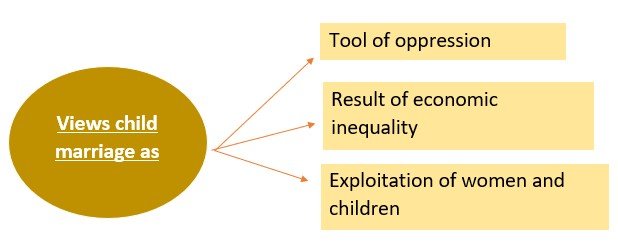
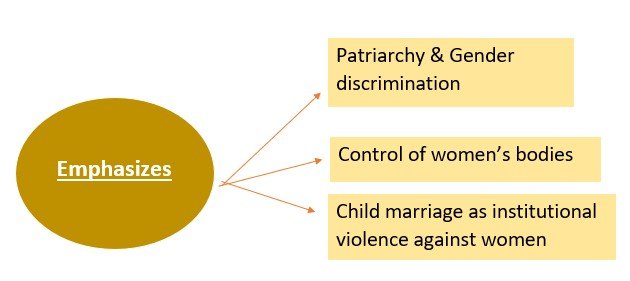
C. Feminist Perspective-
5. Impact of Child Marriage (Social Consequences)-
A. On Girls
→Denial of education
→Health risks (early pregnancy)
→Domestic violence
→Loss of autonomy
B. On Family
→Intergenerational poverty
→Poor health outcomes
→Weak family stability
C. On Society
→High maternal & infant mortality
→Population growth
→Slowed social development
6. Child Marriage and Social Change

However, persistence due to:
→Cultural lag (Ogburn)
→Deep-rooted traditions
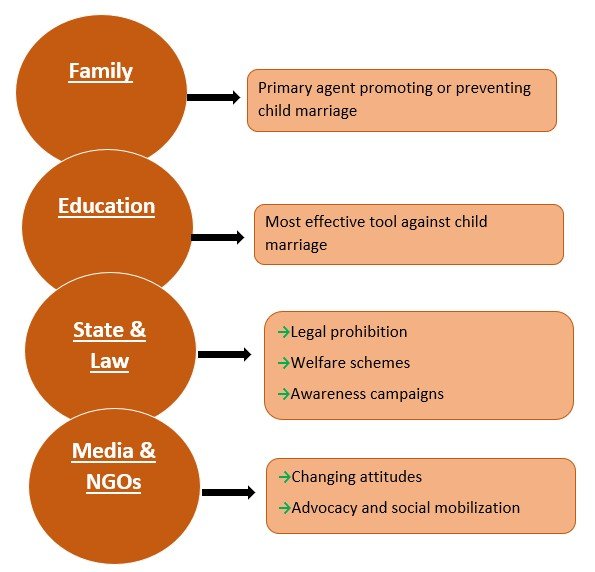
7. Role of Social Institutions
8. Child Marriage as a Human Rights Issue

9. Child Marriage in India – Sociological Reality
More prevalent in:
→Rural areas
→Economically backward regions
Higher incidence among:
→Marginalized communities
→Lower socio-economic groups
10. Measures to Prevent Child Marriage (Sociological Approach)
→Social awareness
→Women empowerment
→Community participation
→Education of girl child
→Change in social attitudes
From a sociological perspective, child marriage is a socially constructed problem sustained by patriarchy, poverty, and tradition. Its eradication requires social change, not only legal control.

we believe in a holistic approach to legal education building not just lawyers, but socially conscious leaders of tomorrow.
